
Invisible Man

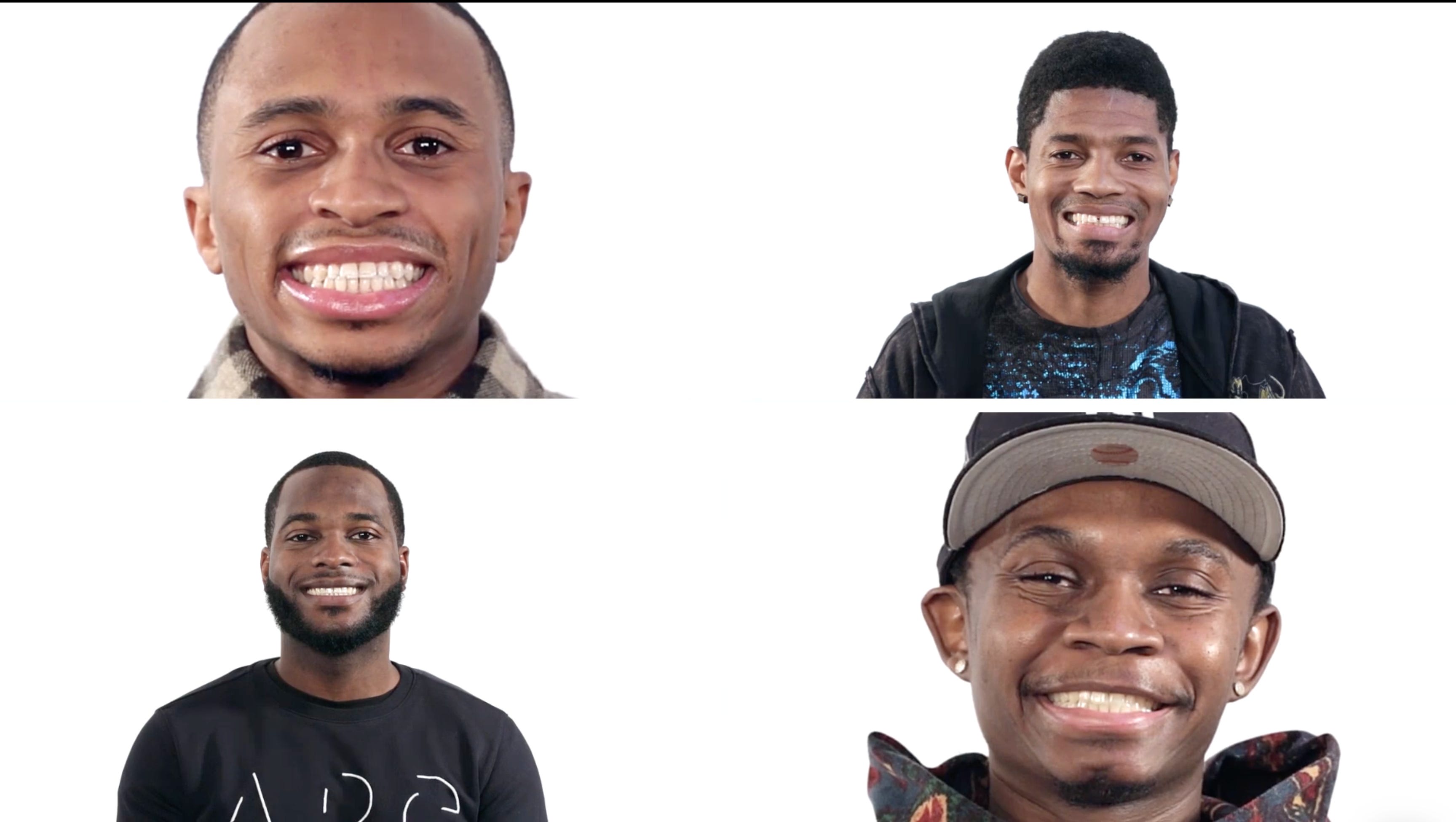
A few weeks ago, I asked my online community and friends to help me find two works of art that had stayed with me, pieces that left a mark so profound and haunting that they lingered in my psyche for years, exactly as great art should.
I am very happy to report that I have found one of those two pieces. It’s a video installation by Kehinde Wiley titled Smile (created in 2001 and revisited in 2016), which I first encountered at the No Commission art fair in the Bronx in 2016. The exhibition, curated by Swizz Beatz, filled a vast and electric space that felt more like a carnival than an art exhibition, yet this piece carried an impact so commanding that it cut through all the noise.
My friend and fellow art enthusiast Abiola had seen it before me, and he was so shaken by the experience that he crossed the expanse of the fair to find me, and insist I come see it with my own eyes. The moment I stood before it, I understood exactly why. The work was quiet, devastating, unforgettable, and it lodged itself in my memory where it has remained ever since.
The piece unfolds across four video channels and features seventeen young Black men, each discovered by Wiley on the streets of New York. They are asked to do one simple thing: hold a smile for an hour while staring into the camera. What seems effortless at first quickly becomes an ordeal of endurance. Muscles tremble, expressions harden, and one by one the masks of joy begin to crack. Several of the men break into tears, unable to contain the pain of maintaining a facade that no longer feels human.
The work is haunting in its simplicity. Each smile, strained to the point of collapse, becomes a metaphor for the burden of presenting happiness in a world that so often demands it of Black men, regardless of their inner reality. The smile is more than performance; it is protection. It is a shield against the scarlet letter of being branded an “Angry Black Man,” a label that can strip away not just dignity, but safety. To be seen as angry is to be seen as a threat, and to be seen as a threat is to put your own life and the lives of those you love in danger. In that light, the forced cheer becomes not only exhausting but perilous, a survival strategy demanded by a society that refuses to meet Black men with the grace of full humanity.
Their tears are not staged; they are the natural breaking point of bodies and spirits asked to bear too much. In this quiet act of performance, Wiley illuminates the violence of expectation, the emotional toll of being asked to appear fine when the truth is anything but.
Through the cycling of face after face, the work transforms from an endurance test to a profound social commentary. Smile is not only about the exhaustion of holding a grin, it is about the cost of being reduced to what others want to see, the weight of being looked at but never truly known.
With a bit of searching, I was also able to find the video I captured of it all those years ago. Watching it now, I am struck again by the quiet power of those faces, the strain of each forced smile, and the tears that broke through despite every effort to hold them back. Seeing it replayed after all this time feels like stepping back into that vast, electric space at the No Commission art fair, and yet it also feels like encountering something far larger than memory - a testament to the endurance, vulnerability, and humanity that Kehinde Wiley captured in those seventeen young men.
Nearly a decade later, I can still feel the grip it had on me. The images of those young men remain etched into my memory, their trembling faces and quiet tears returning unbidden in moments of reflection. Their endurance, their silent suffering, still speaks to the larger truths of Black existence: the daily, exhausting negotiation between self and society, the imperative to mask anger, fear, or pain with a smile, and the constant threat that to reveal one’s truth is to invite harm in a world that does not grant them the freedom to simply exist as they are. That is the kind of truth great art carries, one that lodges itself in your chest, rattles you, and refuses to leave. Smile does not fade; it lives inside you, a quiet, relentless echo of what it means to be seen yet never fully known.
Before You Go:
Thank you for taking the time to read my words. Every time someone has told me they enjoyed something I wrote, I carried that with me. I am grateful for those moments. I am grateful for you.
But I do not write only to be read. I write to be in conversation. I want to know what you think. I want to know where you agree, where you disagree, where something made you pause or react.
Do not just read and move on. Comment. Engage. Respond. Let my words push you somewhere, and then tell me where they took you.
Your voice matters to me. Your thoughts matter to me. Your words mean the world to me.
Please and thank you.